Amanda de Frumerie
  • Sunflower dreaming
  • Bedstilt
  • Sound Patterns - utställning, bok och konsert
  • Manifestation Lövholmen
  • Mörka stjärnan
  • Omslag till Håll skeppet sjunkande
  • Bild till OEI och Rönnells
  • Rotrum
  • Stad
  • Three true Tales about Music and Technology
  • Bröderna Lejonhjärta
  • Vårsalongen 2019
  • Hiding Places
  • Partikelbana
  • Music in Text
  • The Searchers
  • Ensamma tillsammans Rooms of Perec
  • Barnet
  • Aspuddsspelet - 1986
  • I hear a new world
  • Vampyr, Death and Vanilla
  • Sluta hennes ögon
  • När människor ser på tv är de någon annanstans
  • Döden och Lyckan spela boll
  • Samlingen
  • Nils Holgerssons underbara resa genom Sverige
  • Fjäril
  • Little other
  • Plastecine shoes
  • Kontakt
  • CV
  • Om mig
  • Länkar
  • Porträtt av en förskolefröken
Picture
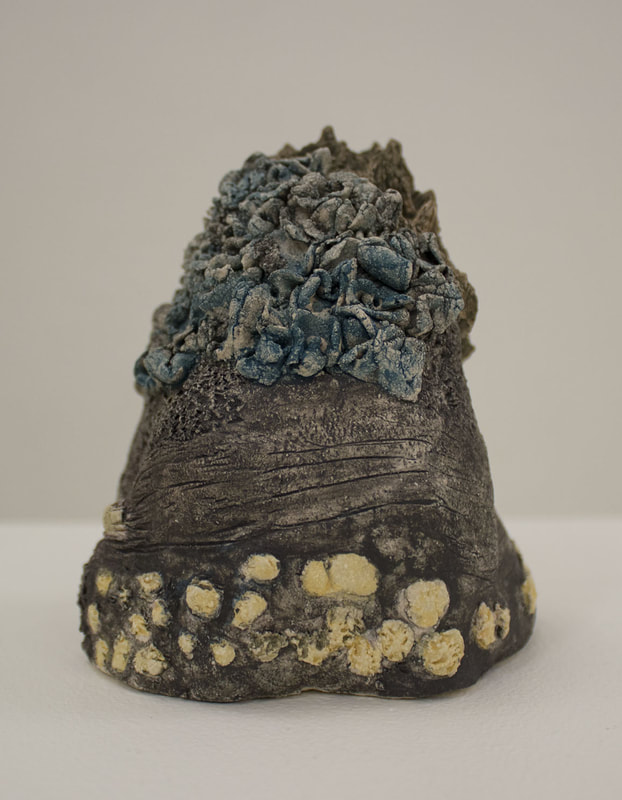
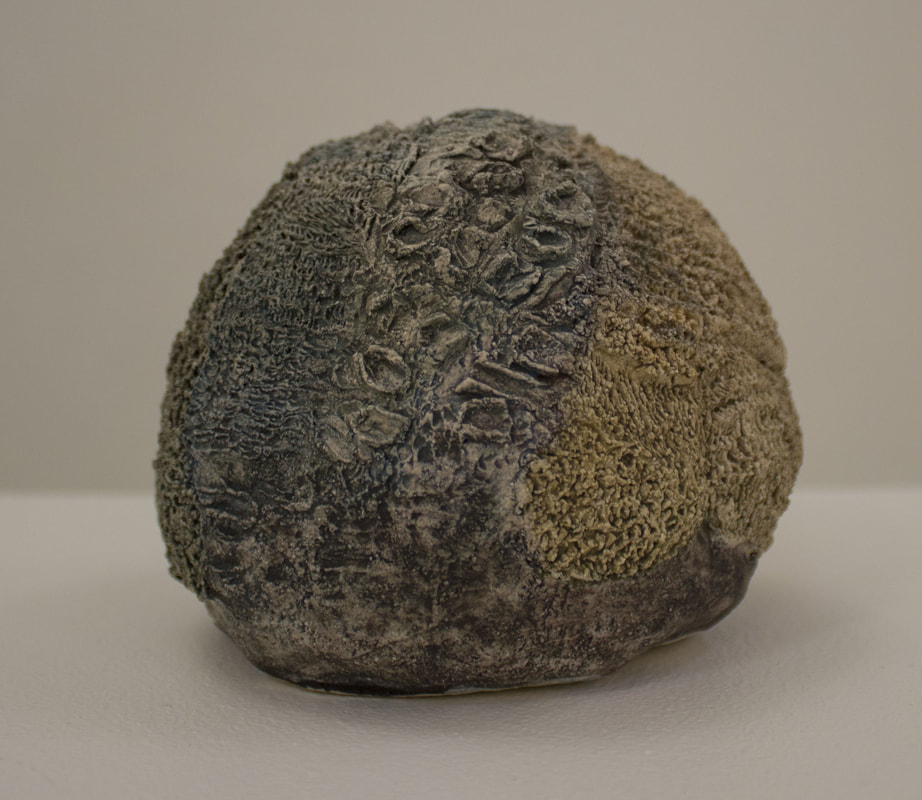
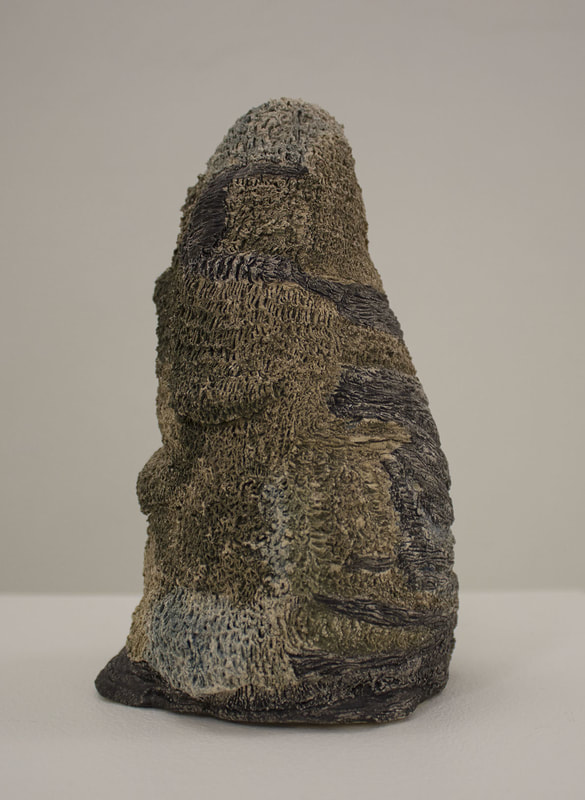
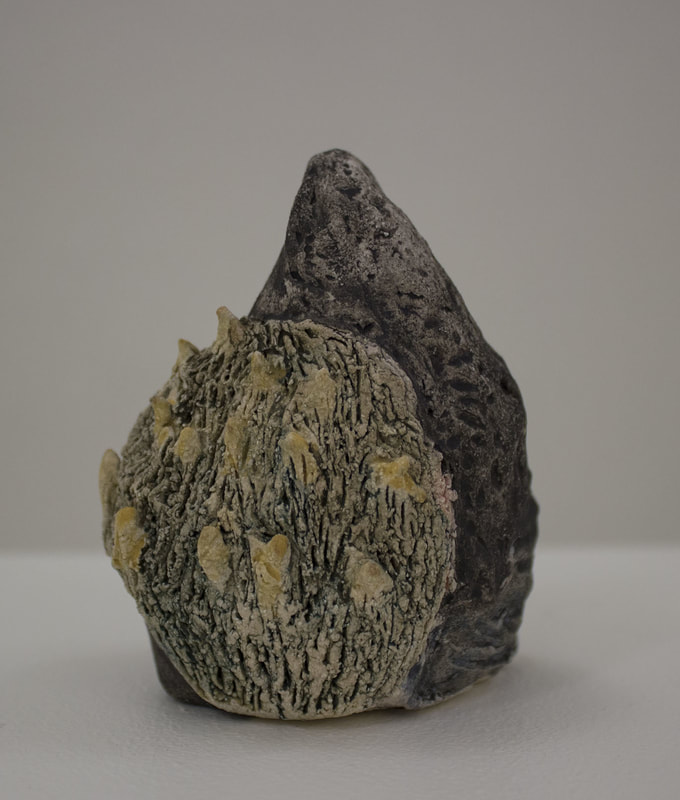
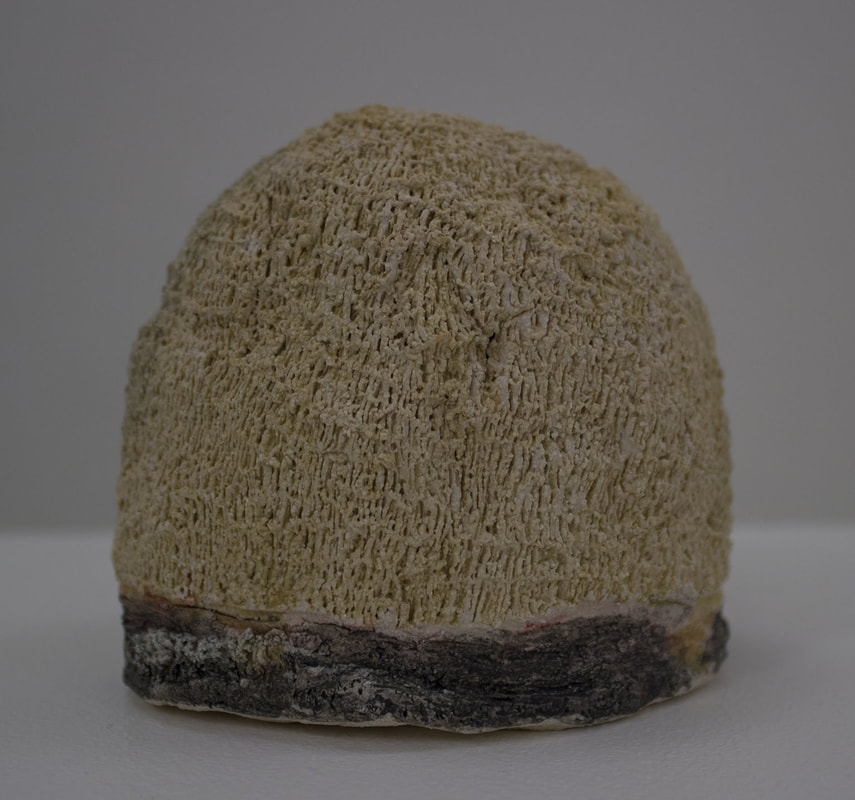
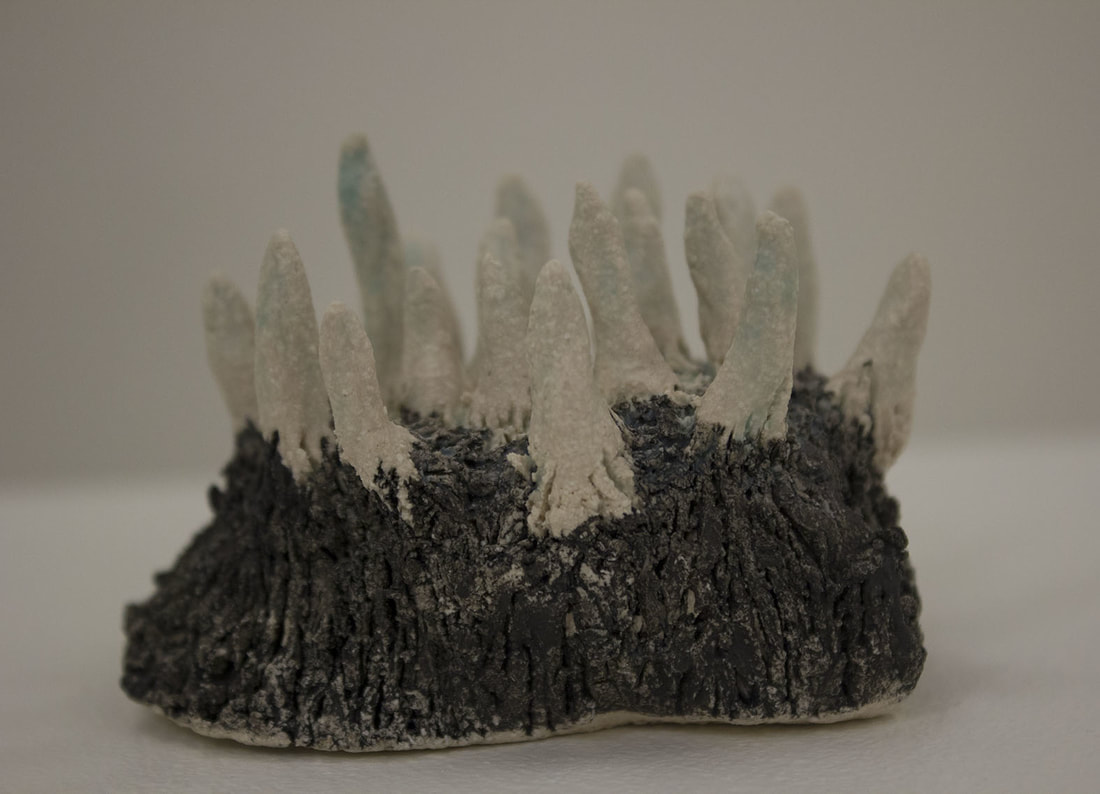
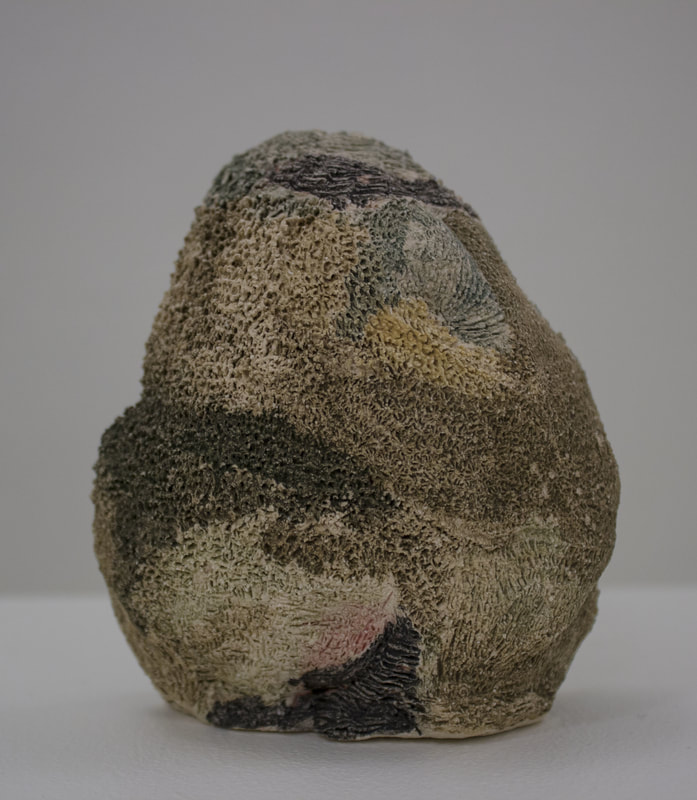
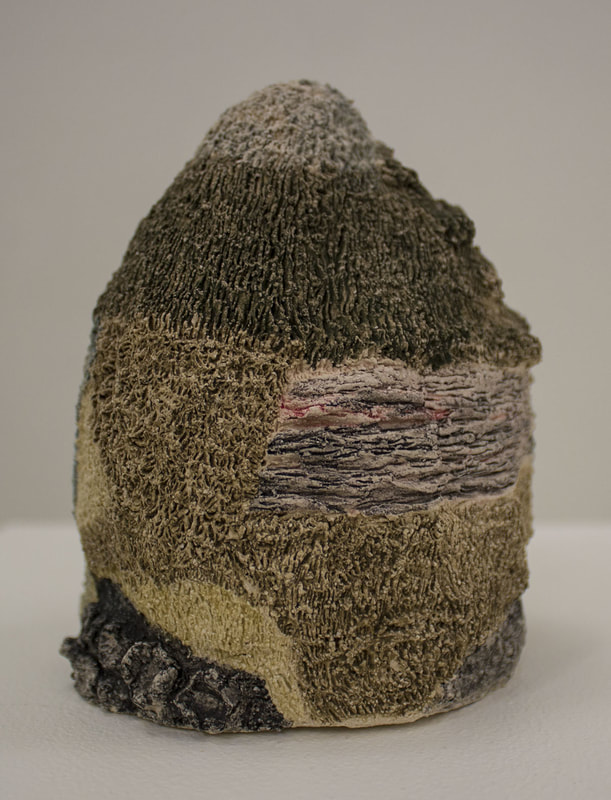
Skulpturer i keramik, höjd 8-20 cm

Hiding Places 
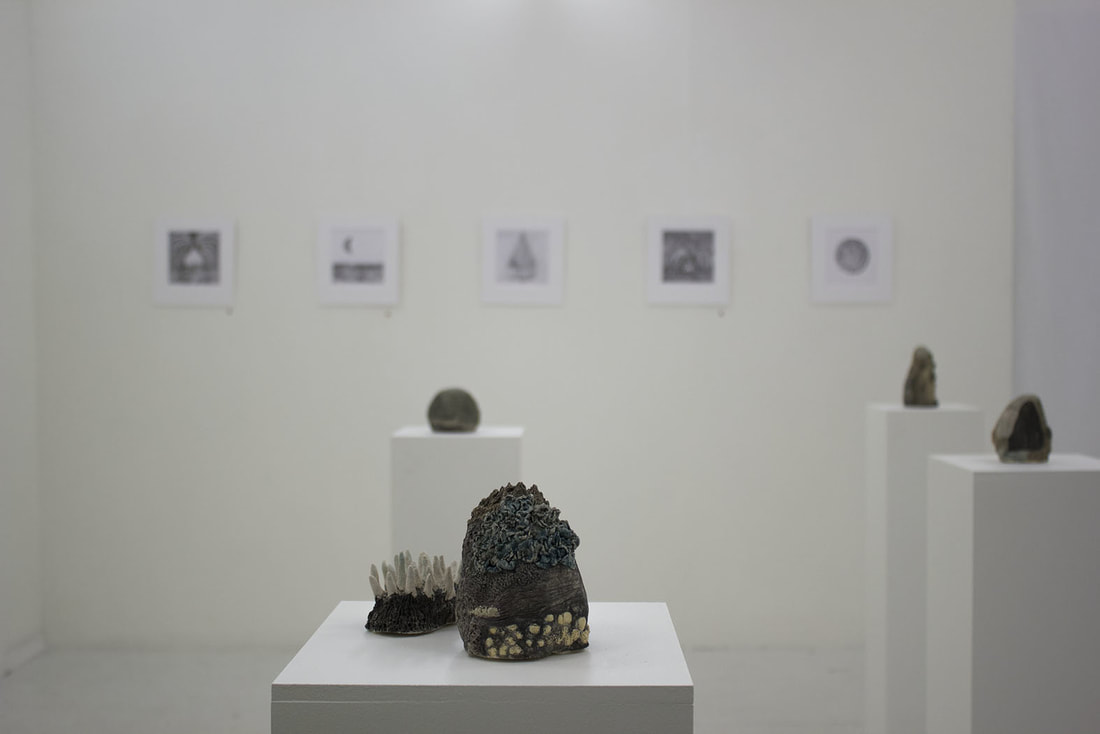
Utställning på Galleri Toppen 22/11-29/11- 2017

På utställningen visades dessa keramiska skulpturer med samlingsnamnet Hiding Places  och teckningar i bildserien Partikelbana samt en kartbild The Searchers. På vernissagen spelade Aina Myrstener cello och till utställningen finns en text skriven av konstnären och författaren David Edward Price.
Hiding Places
This text describes an encounter with the objects that form the central part of the exhibition Hiding Places. Or rather, it attempts to do so. My encounter with the objects has been fleeting (if intense), and the objects themselves resist easy description. Their recalcitrance in this regard isn't aggressive, or even perhaps deliberate, but due to their self-containment. Sitting just across the water from the exhibition space, Amanda and I write to each other to discuss this attempt, her asking me to write something, and sending some photographs of the objects. Now (having looked at the objects in much more detail, in situ) I cross the bridge back to the same place and write again. This text derives from notes made in the intervening days, cemented together and adjusted according to the things themselves. I keep using the term 'objects', as (if) they are of uncertain identity. They are like stones, or petrified masses of some kind, or like living things, or indeed like 'places' of some kind. Whilst (for a small being) most of them could be hidden behind, one of them could be hidden in – it has an interior. The others would seem to be exterior surfaces. Having seen them in close proximity, they are just as mysterious as they were in photographs - the material itself (its texture and density of physical detail) is photogenic, but they are of unreadable identity. I would add that, in very close proximity, they are also haptogenic; they would fit nicely in the hand, or in two hands clasped into a bowl. They seem unfathomable. Or like aquatic masses, from the fathoms. Or more precisely like coral or sponge, materials whose porosity they share, to an extent: they are formed of clay, which has been allowed to dry, before being painted, the paint slightly absorbing into the clay before the objects were fired. In describing the very fine, detailed marks that are first inscribed in the clay Amanda writes “I have drawn in the clay”, which can be productively misread in a number of ways; the clay itself, as if autonomous, drawing in marks and impressions, drawing in Amanda's long-standing desire to make these unnamable objects, drawing in and slightly fading the pigment applied to their surface, and drawing in the heat of the kiln to solidify themselves. Their mode of manufacture means that the objects are subject to an unpredictable birth; it is impossible to precisely plan the way they will be once they emerge from the fire. They almost take on personae, or almost seem to be petrified personae, relics of an animal mass that was once mobile and pliable. The same sensibility in mark-making is clearly visible in the ink drawings displayed around the objects; it's perhaps for this reason that I suddenly notice the absence of the word 'sculpture' in this text so far. The objects are of course sculptures, but thinking more personally in terms of Amanda's work they are perhaps more accurately defined by the way they have taken the gestures of drawing and painting into themselves; subsumed these modes of image-making into integral, fragile objects. 
David Edward Price 
Artist and Critic

Powered by Create your own unique website with customizable templates.